Patented inventor
Creator of NateGate, an interchangeable pickup-tailgate system developed to help a truck do more.
Inventor. Army veteran. Children's book author. Lifelong collector of problems worth solving.
What will you share with the world?
I’ve been fascinated by things that move, break, connect, and almost work for as long as I can remember. Motorcycles at five. Race cars at seven. An unofficial run at Portland International Raceway when I was eleven. Somewhere along the way, curiosity turned into a habit of asking a question that still gets me in trouble: What if we tried it another way?
I’m a disabled U.S. Army veteran, a patented inventor, a lifelong hands-on builder, and a published children’s book author. These might look like unrelated chapters, but they all come from the same place: imagination is only useful if you’re willing to do something with it.
FishWrex is the name I put on that approach. It isn’t a fabrication shop, a repair service, or a promise that I have an answer to everything. It’s a home for original ideas, unconventional builds, practical inventions, and the occasional project that starts with “This might be stupid,” followed closely by “Well, let’s find out.”
Some things work on the first try. Most worthwhile things teach you something before they work. I like that part, too.
Creator of NateGate, an interchangeable pickup-tailgate system developed to help a truck do more.
From a Bronco hardtop lift for a veteran working alone to specialty equipment and unusual transportation challenges.
Metal art, vehicle builds, experimental projects, and published children’s stories including Carl and the A-Squad Adventures.
Interested in talking with individuals and companies about original ideas, product development, licensing, and collaboration.
NateGate grew out of looking at a pickup tailgate and seeing more possibilities than a hinge and a latch. I designed and patented a system that changes configurations to help move equipment, longer materials, and the things that ordinary truck beds weren't designed around. I’m pursuing opportunities to bring the invention further into the world.
When a disabled veteran needed to remove his Bronco hardtop without another person’s help, I developed a lift to make that possible. I built more than one, and some were sold. A different sort of challenge came when my brother and I bought trailers and figured out how to secure and haul retired military helicopters; we handled specialized hauling work across several states, with trips into Canada as well. Different problems, same instinct: find a workable way forward.
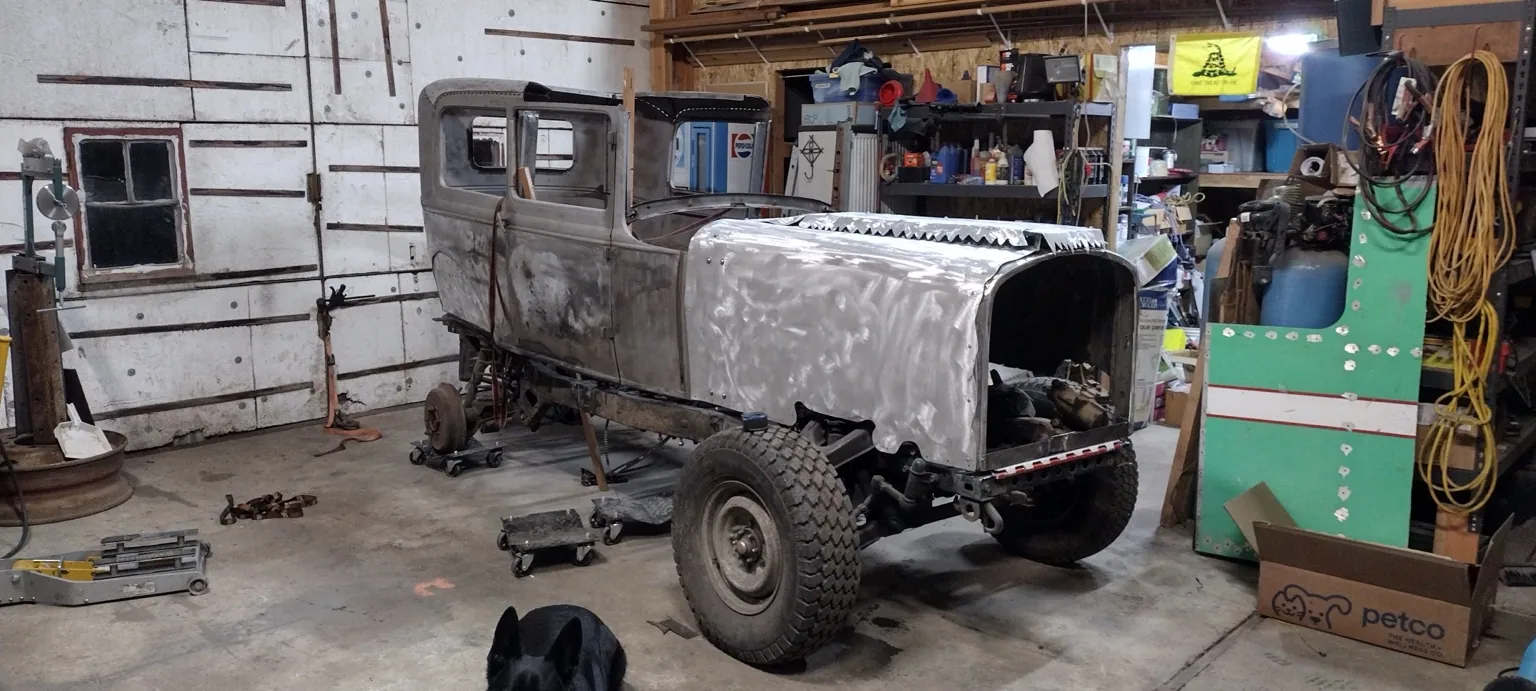
Then there are the projects that don't fit a category: Steel Kharma, my ongoing rat-rod mud-racing build; a pond weed puller; illuminated metal sculptures; wind chimes; strange little mechanical experiments; and ideas that begin as scraps on the shop floor.
I also write books for children, including the Carl stories and A-Squad Adventures. The materials are different, but the goal isn't: spark curiosity, encourage problem-solving, and give somebody something worth smiling about. The books will have their own place in the FishWrex store.
I'm not advertising a shop full of manufacturing services. I'm looking to connect with people and companies who see possibility in unusual ideas and might want to help develop one.
Some ideas are worth building for other people.
Real racing. Real tracks. A driver’s-seat experience—from wherever you are.
I also founded Rush Ride Foundation, a separate developing nonprofit. Its aim is to give disabled veterans, children, and others facing barriers to motorsports a real driver's-seat racing experience through live onboard video, full remote vehicle control, and physical dirt tracks. The goal is to make participation possible from potentially hundreds of miles away. The facility and connection technology are still being developed.
Rush Ride is not a FishWrex product or service. It reflects a belief I carry into everything I make: technology and imagination matter most when they help somebody participate, discover, or enjoy life a little more.
I don’t need every idea to change the world. If it solves a problem, starts a conversation, gives someone independence, or inspires a kid to try something new, that’s a pretty good beginning.